

Ever found yourself puzzling over how to get a recliner chair through a door? You’re not alone. The unique size and shape of recliner chairs make them notoriously challenging to move. They’re bulky, awkward, and seem to fight you at every turn. Knowing the right techniques to navigate this furniture through doorways is crucial. Without the proper know-how, you risk damaging not just the chair but also the doorframe. Let’s dive into how you can master this task with finesse and avoid unnecessary headaches.
Table of Contents
Pre-Move Preparation
Understanding Your Recliner
Recliners come in all shapes and sizes. From the classic rocker recliners to the modern power recliners, each has its quirks and features. Before you even think about moving your chair, it’s vital to get acquainted with its type. Why? Because a power recliner with all its electronic components demands a different approach than a simpler rocker recliner. Here’s where the manufacturer’s manual becomes your best friend. It’s packed with crucial disassembly instructions specific to your model. Ignoring this could lead you to pull apart something you shouldn’t, turning your move into a disaster. So, take the time to understand your recliner; it’s the first step in ensuring a smooth move.
Measuring Up
“How to get a recliner chair through a door” isn’t just a question of muscle; it’s one of measurement. Before you start, grab your tape measure. You need to know the exact dimensions of your recliner in its most compact form. Then, measure every door and hallway you plan to navigate through. It might seem tedious, but understanding the minimum space requirements for moving your furniture is crucial. It’s all about finding that sweet spot where your recliner can glide through your doorways without a hitch. So, measure twice, and move once.
Gathering the Right Tools
Equipped with the knowledge of your recliner’s intricacies and the measurements of your moving path, it’s time to gather your tools. You’ll likely need a set of screwdrivers for disassembly, furniture pads to protect your recliner during the move, and possibly a furniture dolly to ease the transport. Each tool plays a pivotal role in ensuring your recliner arrives at its new location in the same condition it left. Skimp on this step, and you might find yourself facing scratches, dents, or worse, a broken recliner. So, make sure your toolbox is ready for action.
Disassembling the Recliner

Step-by-Step Disassembly Guide
Ever found yourself scratching your head, wondering how to get a recliner chair through a door? The answer often lies not in the brute force but in the smart disassembly of your cozy throne. Let’s dive into the nitty-gritty of taking apart common types of recliners, ensuring you keep all bits and bobs in check for hassle-free reassembly.
First things first, identify what kind of recliner you’re dealing with. Is it a traditional lever-operated chair, a more modern power recliner, or perhaps a sophisticated glider? Each type has its unique build and mechanism, meaning the disassembly process can vary.
For the classic lever recliners, start by removing the back. Usually, it’s clipped or bolted onto the seat frame. Look for levers or release mechanisms at the back, often hidden underneath the upholstery. A gentle tug after releasing these catches should free the backrest.
Power recliners need a bit more caution. Unplug the chair and ensure it’s disconnected from all power sources. Similar to manual chairs, the back should come off first, but you’ll also need to handle the wiring and components carefully. Look for quick-connect clips that detach the electrical components without a fuss.
Glider or rocker recliners might have additional components underneath, like the rocking mechanism, that need to be addressed. Secure any moving parts before attempting to take the chair apart to avoid unexpected shifts.
Keeping track of hardware is crucial. A pro tip: grab a set of resealable bags and label them according to the chair parts—screws for the backrest, bolts for the seat, and so on. This simple step will save you a world of confusion when it’s time to put everything back together.
Packing and Protecting Components
Now that you’ve got your recliner in pieces, ensuring they arrive in tip-top shape at their destination is paramount. “How to get a recliner chair through a door” doesn’t just stop at disassembly; packing and protection are just as crucial.
Wrap each component separately with furniture pads or bubble wrap. The goal here is to cushion the parts from bumps and scrapes during the move. Pay special attention to protruding parts and edges, as these are prone to damage and can also cause injury.
Secure the wrapping with packing tape, but avoid placing the tape directly on the chair’s surface, especially if it’s leather or a delicate fabric. Instead, wrap the tape around the protective padding to keep everything snug.
Labeling each part can be a game-changer for reassembly. Use colored stickers or tags to match parts and their corresponding hardware. This step, combined with the hardware bags you’ve prepared, turns what could be a puzzle into a straightforward task.
Understanding how to get a recliner chair through a door involves more than just physical maneuvering. Disassembly, when done right, not only makes the move easier but also protects your furniture from damage. Armed with these insights, your recliner will be lounging in its new spot in no time, ready for your next relaxation session.
Moving Strategies
Maneuvering Techniques
So, you’ve disassembled your recliner and are now faced with the challenge of how to get it through the door. This task requires more than just muscle; it’s about mastering the art of maneuvering. Let’s explore some proven techniques to navigate this tricky terrain.
Navigating large and bulky items through confined spaces is akin to a dance. The key moves? Angles and rotation. Picture this: you’re holding one end of the recliner’s base, and it just won’t fit through. Instead of pushing harder, you tilt and rotate the piece, finding that sweet angle where it glides through effortlessly. It’s about working smarter, not harder.
Practicing the pivot is another game-changer. This technique involves lifting one end of the item higher than the other, creating a diagonal line that offers more clearance. The pivot is particularly effective in tight corners and when navigating through doors with limited headspace.
Remember, every move is a calculated step. Assess the space, plan your approach, and communicate clearly if you’re working with a partner. This strategic planning can significantly reduce the time and effort needed to maneuver your recliner through challenging spaces.
Getting Through the Door
With your recliner parts wrapped and ready, it’s time to tackle the main event: how to get a recliner chair through a door. This step-by-step guide ensures your recliner—and your doorway—emerge unscathed on the other side.
Size it up. Before you begin, double-check the dimensions of your disassembled recliner against the door opening. It might seem obvious, but confirming that the pieces will indeed fit can save you from unnecessary hassle.
Protect your space. Door frames are notorious for acquiring dings and scratches during moves. Use foam padding or thick blankets to safeguard both the door and the furniture. Secure the padding with painter’s tape to avoid leaving any residue.
Choose your entry point. Decide whether it’s best to move your recliner pieces vertically, horizontally, or at an angle. Sometimes, flipping a piece on its side provides the extra inches you need to clear the frame.
Slow and steady wins the race. As you begin to move each piece through the door, resist the urge to rush. Gentle, deliberate movements allow you to adjust as needed without causing damage.
Reassess and adjust. If you encounter resistance, don’t force it. Take a moment to reassess your approach. Sometimes, a slight tilt or shift is all it takes to clear an obstacle.
By following these steps and utilizing the techniques outlined, you’re well-equipped to get your recliner chair through the door with minimal fuss. Remember, it’s not just about physical strength but about patience, strategy, and a bit of ingenuity.
Reassembly and Placement
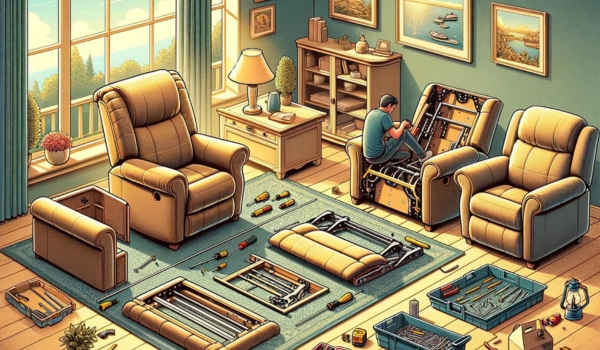
Reassembling Your Recliner
After successfully navigating the tight squeeze of “how to get a recliner chair through a door,” the next chapter in our furniture-moving saga involves putting Humpty Dumpty back together again. This is where the magic of reassembly comes into play, ensuring every piece of your recliner finds its way back to its rightful place, securing a comfy and functional outcome.
Firstly, lay out all the components and hardware you’ve neatly organized and labeled during disassembly. This visual inventory will help you ensure nothing goes missing in transit. If you snapped pictures before taking them apart (highly recommended), now’s the time to use them as your guide.
Starting with the base, reattach any legs or wheels that were removed. From there, work your way up, securing the seat to the base, followed by the backrest. If your recliner is electric, carefully reconnect all electrical components and wiring, adhering to the manufacturer’s instructions to avoid any missteps.
Screws, bolts, and fasteners should be tightened just right—not too loose that the chair feels wobbly, and not so tight that you risk stripping the threads or damaging the material. A good rule of thumb is to go firm, then give it a quarter turn for good measure.
Once reassembled, give your recliner a thorough once-over, testing all moving parts and mechanisms to ensure everything operates smoothly. This step is crucial, as catching any issues now can save you from a headache later.
Final Adjustments
Now that your recliner is whole again, it’s time for the finishing touches. Making final adjustments to ensure comfort and stability is key to enjoying your favorite lounging spot in its new location.
Positioning your recliner in the room requires a bit of thought. Aim for a spot where it can fully recline without hitting a wall or other furniture. Consider the layout of the room and the flow of traffic to keep your space functional and inviting.
Adjusting for comfort might mean tweaking the tension of the reclining mechanism, especially if it feels too stiff or too loose compared to before. Many recliners have adjustment knobs or screws on the bottom of the back for this purpose.
Testing stability is also important. Sit in the chair, recline it, and use all its features to ensure it feels solid and secure. If anything wiggles or seems off, double-check the assembly to make sure everything is properly connected and tightened.
Conclusion
Getting a recliner chair through a door might seem like a daunting task, but with the right approach and techniques, it’s entirely doable. From preparation and disassembly to moving, reassembly, and final adjustments, each step plays a crucial role in the process. Remember, patience and care are your best tools in ensuring your recliner makes it to its new spot ready for relaxation. Whether you’re moving to a new home or simply rearranging, the satisfaction of settling down in your perfectly placed recliner is worth every effort.
Frequently Asked Questions
How do you fit a recliner through a doorway?
To fit a recliner through a doorway, measure the door and the chair first. Disassemble the recliner if possible, removing the back and any detachable parts. Tilt and angle the chair to maneuver it through the doorway.
How do you move a recliner chair by yourself?
Moving a recliner by yourself requires careful planning. Disassemble it if you can, use a furniture dolly to transport the heavy parts, and protect the chair with blankets. Lift with your legs, not your back, to avoid injury.
How do you put a recliner in a small room?
In a small room, place the recliner in a corner to save space. Ensure there’s enough room to recline fully without hitting the wall or other furniture. Consider a wall-hugger recliner designed for tight spaces.
Can recliners be taken apart?
Yes, most recliners can be taken apart. This typically involves removing the back, detaching the seat from the base, and possibly removing the arms or legs, depending on the model. Check the manufacturer’s instructions for guidance.
Will a recliner fit through a bedroom door?
A recliner can fit through a bedroom door if the door’s width is greater than the chair’s narrowest dimension. Disassembling the recliner can also make it easier to fit through tighter spaces.
How do you fit furniture through a door?
To fit furniture through a door, measure both the furniture and the doorway first. Disassemble the furniture if possible, removing legs, doors, or shelves. Use tilting, angling, and rotating maneuvers to guide the furniture through the doorway.
Important Articles:
How to make a recliner chair cover
How to measure a person for a recliner chair
How to move a recliner chair by yourself

Julie D. Williams is a seasoned chair connoisseur with a decade in the furniture realm. She combines her keen eye for design and deep knowledge of ergonomics to provide readers with reviews and guides, ensuring comfort and style in every recommendation. Each piece is a fusion of aesthetics and function, tested and approved by Julie. A believer in the power of the perfect seat to transform spaces, she’s your go-to source for impeccable finds. When not reviewing chairs, Julie is on the hunt for vintage décor, weaving comfort and beauty into every aspect of life.